
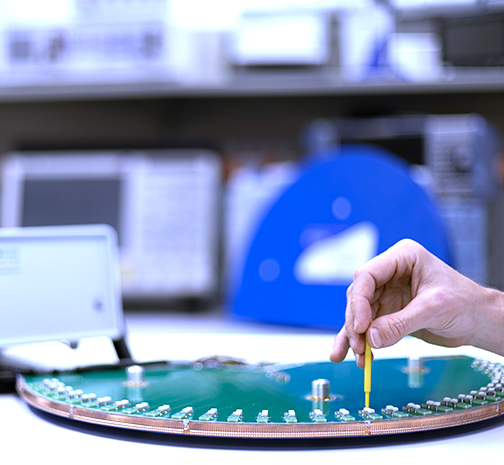

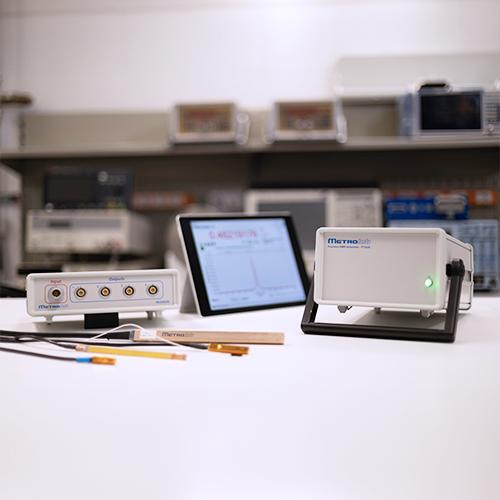
Metrolab is especially known for their precision NMR teslameters. In this section, we want to tell you a little more about this - our - technology.
Since the proton has spin, it tends to align itself to an external magnetic field. However, by giving it exactly the right additional amount of energy, the proton can be induced to flip into the opposite spin state. Nuclear Magnetic Resonance (NMR) occurs when a radio-frequency field applied to a sample is just the right frequency – called the Larmor frequency – to induce this spin-flip.
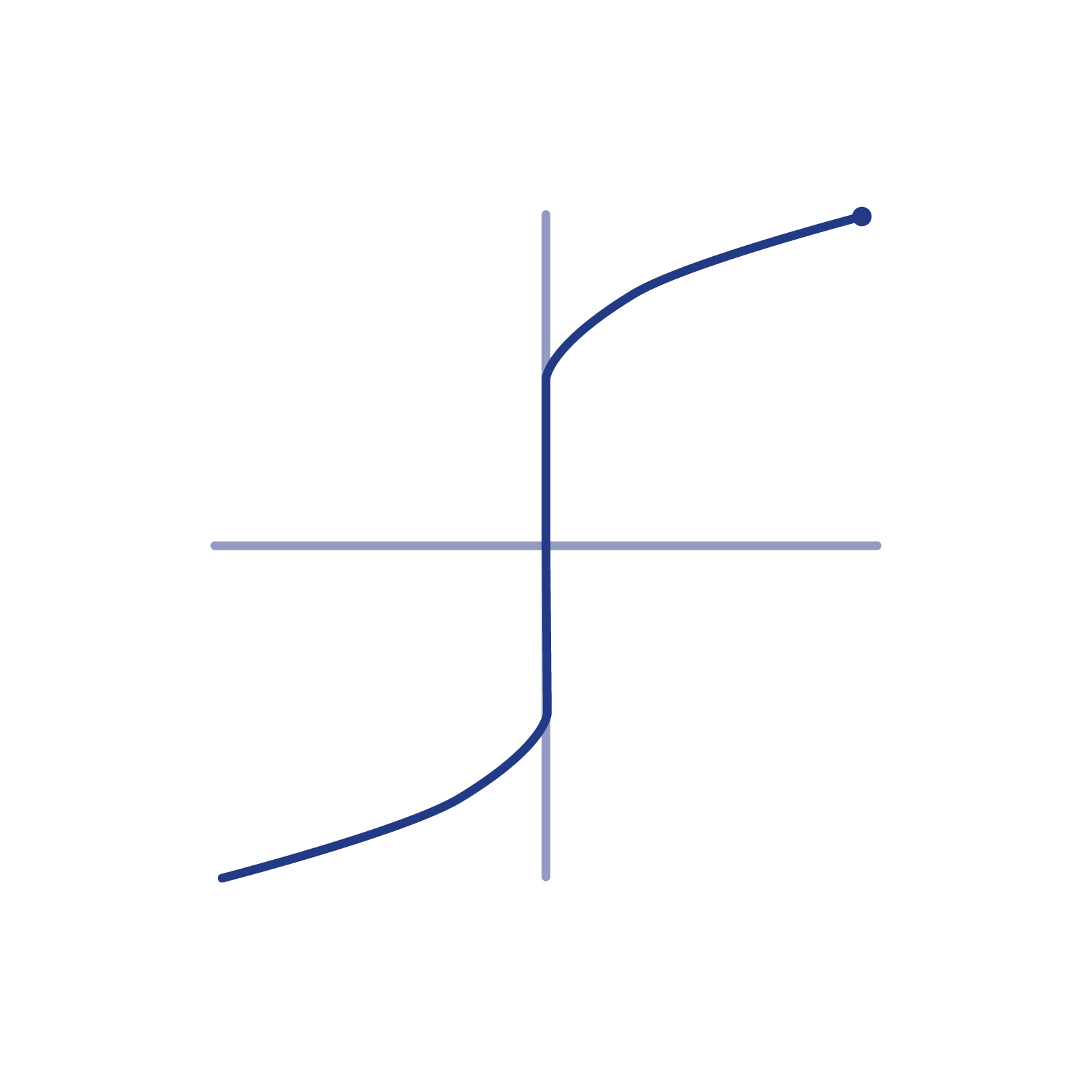
It turns out that the energy difference between the aligned and counter-aligned proton states depends linearly on the field strength. Thus the ratio of the resonant frequency to field strength is a physical constant, called the gyromagnetic ratio (gamma). It is approximately 42.5 MHz/T for protons (hydrogen nuclei).
Other nuclei also exhibit NMR, but with a different gamma, for example 6.5 MHz/T for deuterium and 40 MHz/T for fluorine. Electrons can also resonate (Electron Spin Resonance, ESR, or Electron Paramagnetic Resonance, EPR), with a much higher gamma, approximately 28 GHz/T.
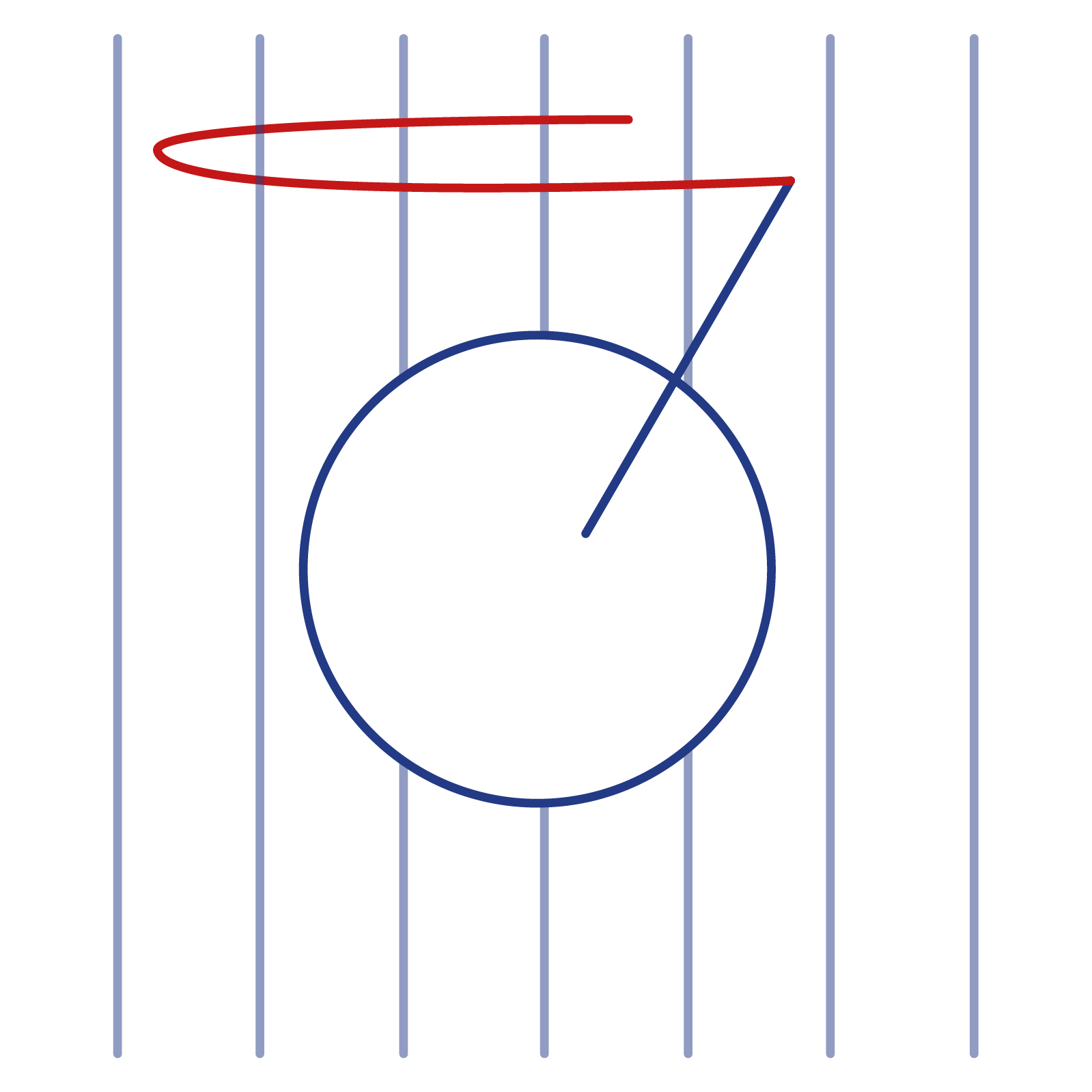
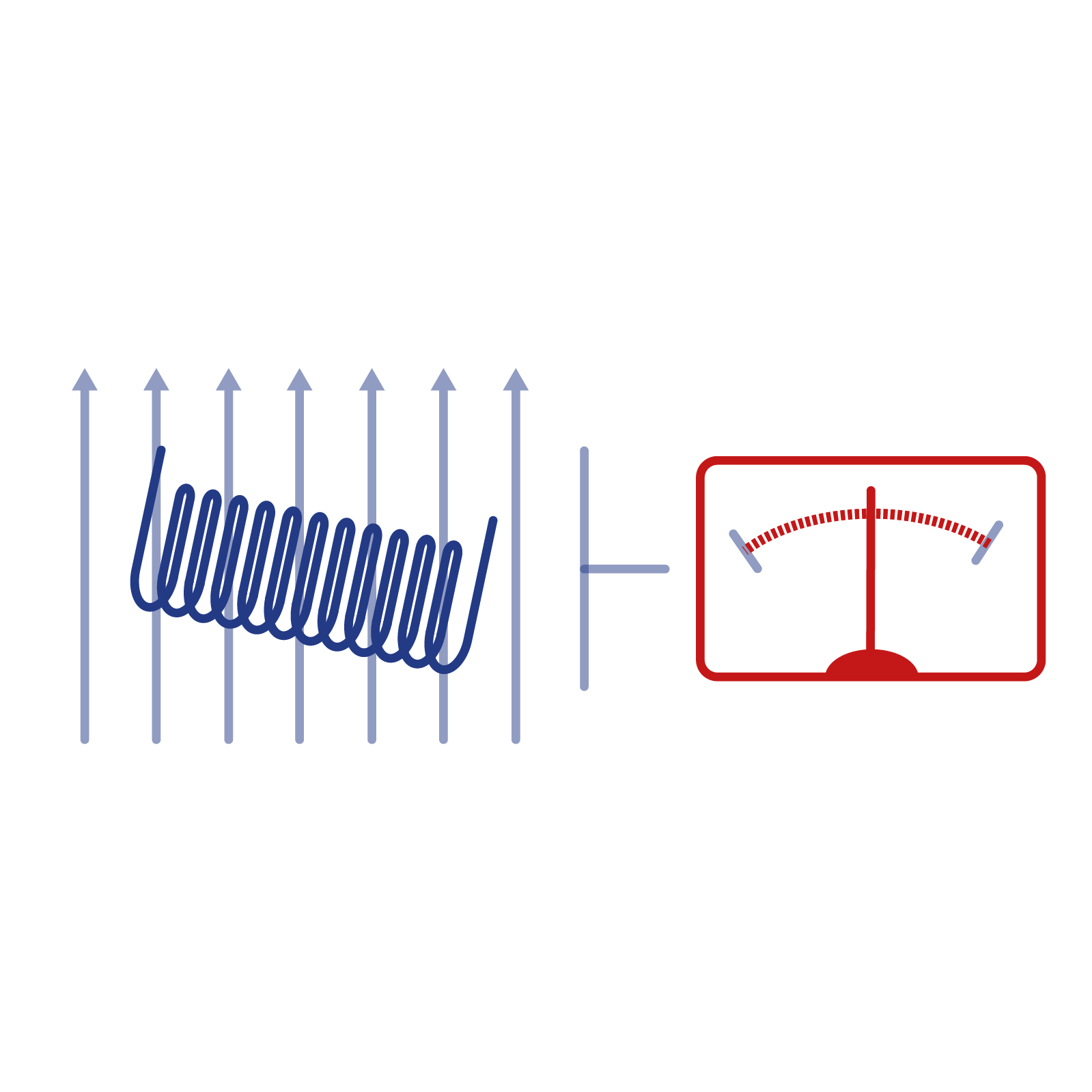
The heart of an NMR magnetometer is therefore simply a coil wrapped around a sample material. The coil provides the RF energy needed to induce spin flips in the sample. It turns out that the best response is obtained if the axis of the coil is perpendicular to the field. The resolution is limited only by the resonance width, which, depending on the sample material, can be very narrow indeed, on the order of 1 Hz. In addition, NMR always measures total field strength, rather than a single component. Last but not least, since the gyromagnetic ratio is constant, the NMR magnetometer has practically no drift and requires no calibration.
There are two fundamental methods of detecting the Nuclear Magnetic Resonance. The continuous-wave approach is like tuning a radio: we slowly adjust the frequency until we "tune in" the resonance. In actual fact, we detect a dip in the signal when our frequency crosses the Larmor frequency and the sample absorbs energy. In addition, between resonances, the sample needs time to shed the absorbed energy and regain its original, spin-aligned state. For these reasons, we need to modulate either the frequency or the magnetic field, constantly crossing and re-crossing the resonance.
The pulsed mode approach is like ringing a bell: we strike the sample with a broad-band pulse, and the sample absorbs and reradiates at the Larmor frequency. The pulsed mode approach is intellectually more satisfying, but also more difficult to implement: generating an energetic broad-band pulse, isolating the high-gain receive-amplifiers from this brutal pulse, mixing the resonant frequency down to a more manageable intermediate frequency, accurately digitizing this intermediate frequency signal, and reliably extracting the resonant frequency – every step is a technical challenge.
At best, NMR provides estimates of the resonant frequency at roughly millisecond intervals. In addition, to reduce the variability, many such estimates are usually averaged together, yielding standard measurement rates approaching a second. NMR is therefore only appropriate for slowly changing fields.
If the field is not uniform, one edge of the sample will resonate at a different frequency from the other edge. The resonance peak broadens and flattens, until it completely disappears in the noise. This determines the field homogeneity limit of NMR.
There are also practical limitations to the useful range of NMR. For low fields, the nuclei are only weakly aligned and the NMR response fades. The simplest solution is to use a larger sample, thereby increasing the number of participating spins; however, at a certain point the sample size becomes impractically large for a general-purpose probe.
For high fields, the NMR response is excellent, but at these higher frequencies, the inductance of the coil starts attenuating the signal. To reduce the inductance, the size and number of turns of the coil are reduced, but a practical limit has been reached when the coil has been reduced to a single tiny loop.
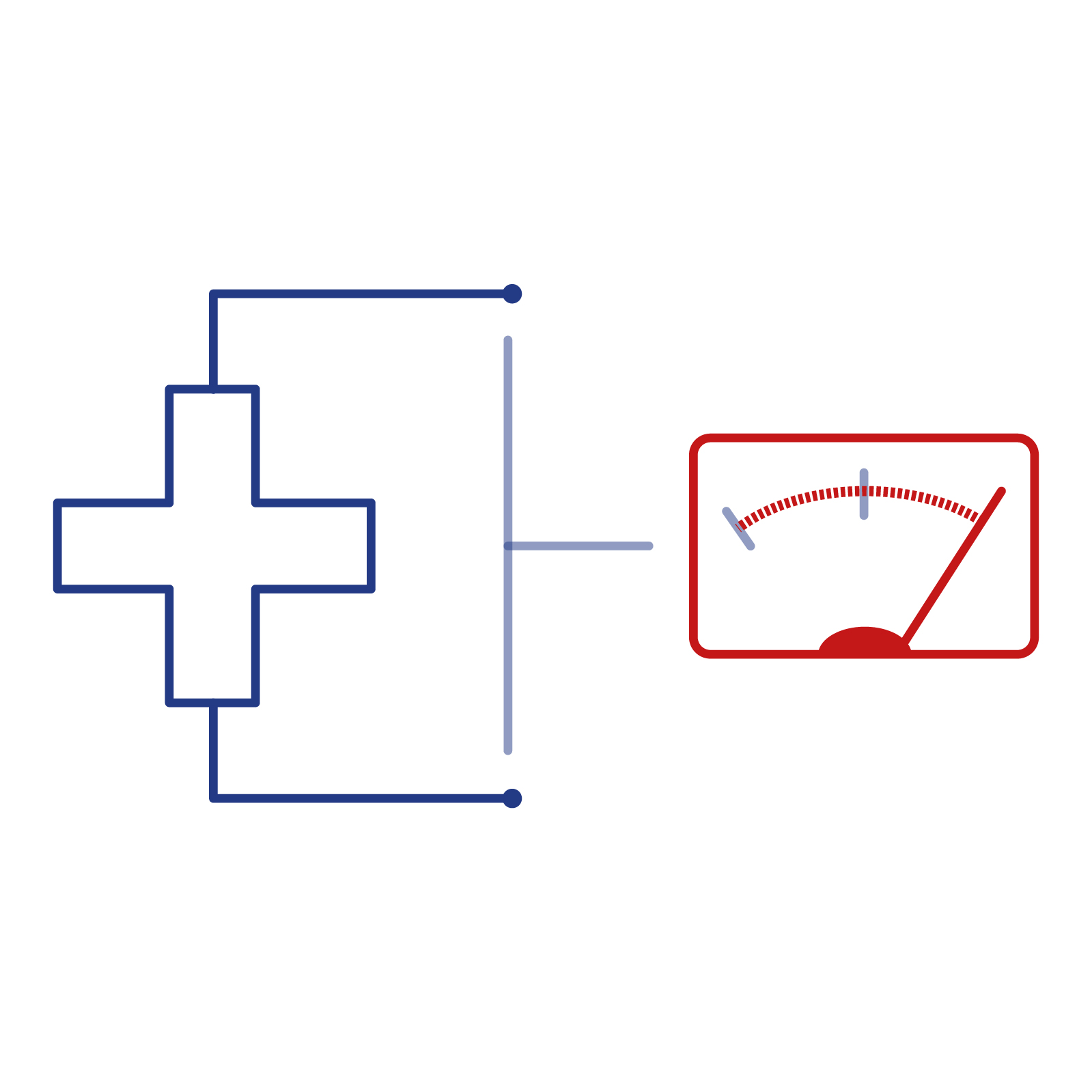
The coil around the sample is an inductor, with a response that rolls off at high frequencies. If we add a capacitance in parallel, we create an LC resonator, which, if tuned to coincide with the Larmor frequency, greatly improves the sensitivity of the NMR signal detection. For this reason, NMR probes are usually tuned.
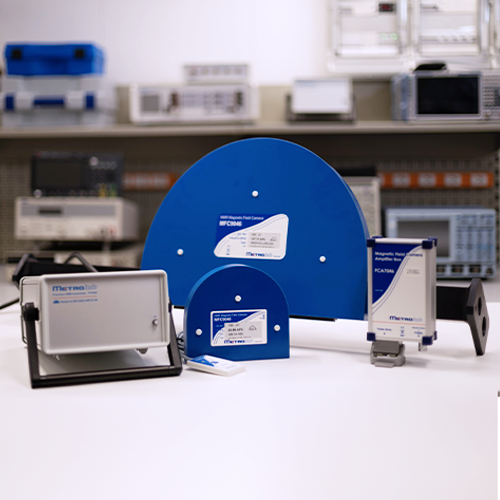
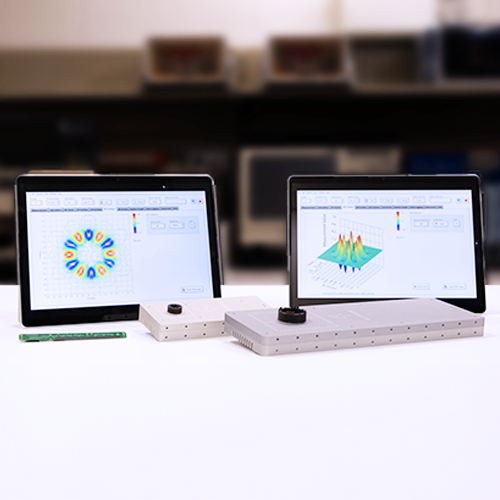
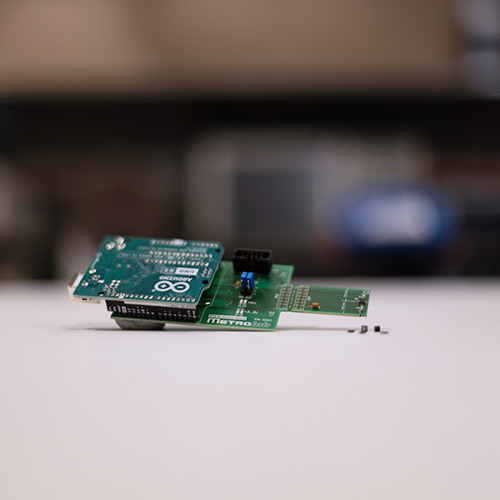
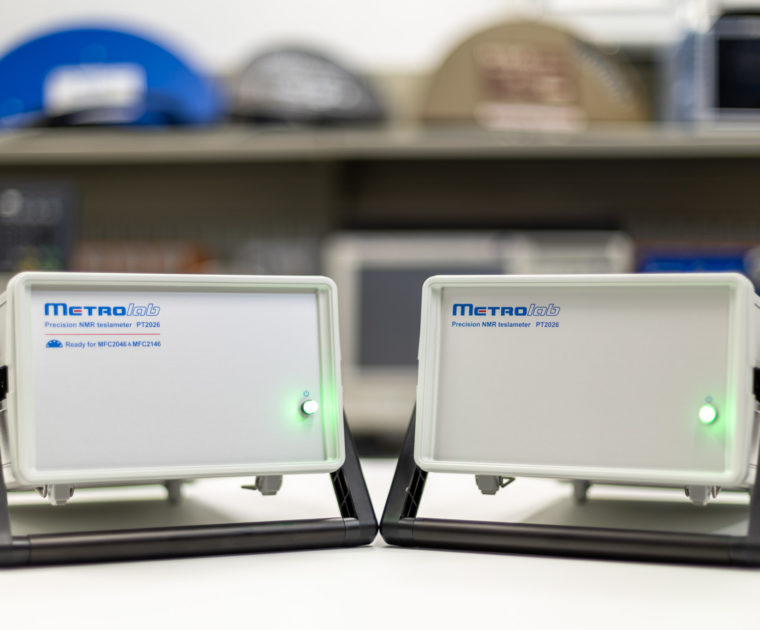
Tuning can be accomplished with a fixed capacitor and/or trim cap. In this case, the probe is manually tuned for a given frequency - as is the case, for example, for Metrolab's Magnetic Field Camera. For our Precision Teslameter, we want a single probe to cover as large a range as possible, and we tune with an electronically controlled varicap. The dynamic range of the varicap imposes a practical limit to the measurement range of a single probe.
To extend the measurement range of NMR, we can use a sample with a different gamma. For example, a deuterium sample has a gamma that is a factor 6.5 lower than the proton's, so the same frequency range will measure fields 6.5x higher. Conversely, an ESR sample, with a gamma 2.5 orders of magnitude greater than the proton's, will measure fields 2.5 orders of magnitude lower. Unfortunately, both these sample materials have practical drawbacks compared to ordinary proton samples.